
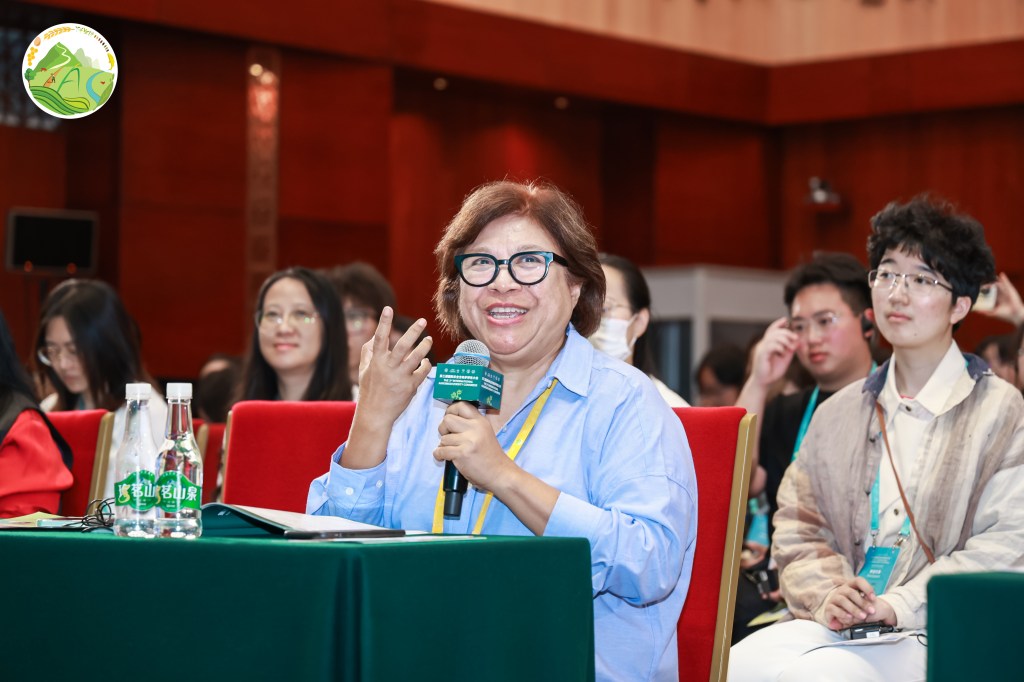
Women Research Institute Speaks in the 3rd International Agrobiodiversity Congress
Written by Sita Aripurnami
Background:
In the context of the ongoing global food crisis, malnutrition, and environmental degradation, there is an urgent need to build more diverse, resilient, and sustainable food systems to nourish a growing population. However, the current global food system is overly reliant on a limited number of species and varieties. The lack of agrobiodiversity results in high susceptibility to pests and diseases, worsened climate change effects, and land degradation, leading to further biodiversity loss.
Agricultural biodiversity – also known as agrobiodiversity- is a critical component of biodiversity overall and encompasses species, genetic and ecosystem diversity of plants, and animals and microorganisms for food and agriculture. Agrobiodiversity plays an indispensable role in ensuring food and nutrition security, responding to climate change, and improving human livelihoods, and it makes a vital contribution to achieving global sustainable development goals. To this end, the international community places high importance on the conservation and sustainable use of agrobiodiversity.
The Third International Agrobiodiversity Congress (IAC-3)
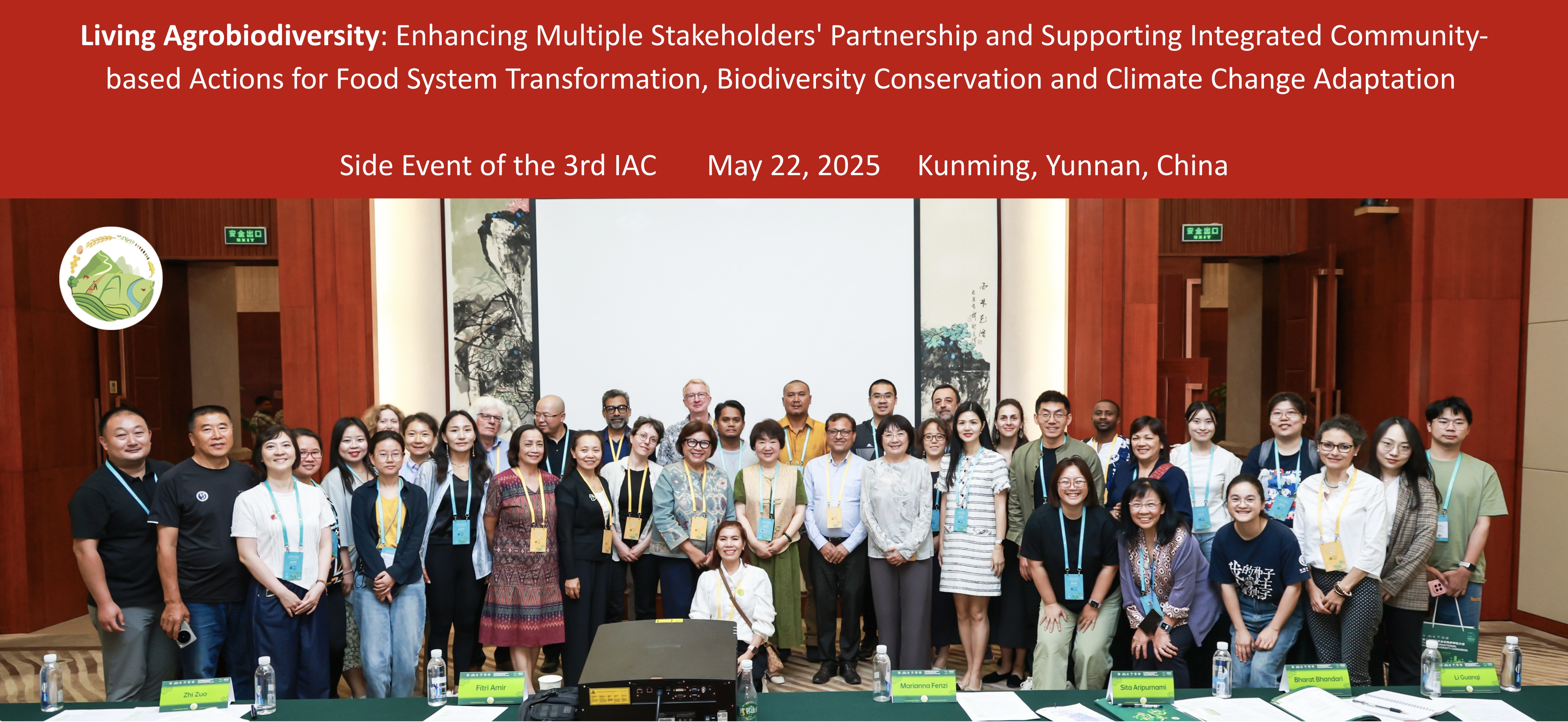
The Third International Agrobiodiversity Congress took place in Kunming on 20-22 May 2025. Kunming was selected as the venue for this Congress since it is situated in China, a major agricultural producer and one of the eight centers of crop diversity in the world. They have a long history of cultivating and preserving a vast host of agrobiodiversity. They too boast extensive experience and numerous successful case studies in the conservation and utilization of agrobiodiversity.
Women Research Institute was asked to share its experiences on engaging the community, especially women, to be involve in Multi Stakeholder Partnership for finding for strategies and methods on conserving and overcoming environmental degradation of and reduced of natural resources diversity in the communities. Executive Director Sita Aripurnami represented WRI in this congress.
Women Research Institute’s participation in this Congress was invited by UN Environment Program – International Ecosystem Management Partnership (Beijing, China). Women Research Institute is a research partner of UN Environment Program – International Ecosystem Management Partnership.
Objectives
- Offer a platform to the global community to share knowledge, innovation, practices, and technologies on sustainable use and conservation of agrobiodiversity.
- Facilitate the exchange and evaluation of the current status of agrobiodiversity, challenges, and trends in its conservation and use.
- Discuss and identify priority areas, objectives, and actions that require global action going forward in the context of agrobiodiversity conservation and use.
Expected outputs
- New knowledge, technologies, and practices are shared from the global research community on conservation and utilization of agrobiodiversity, along with mechanisms for collaboration and exchange.
- New ideas and solutions are proposed to address the challenges in conserving and using agrobiodiversity.
Congress theme and topics
“Agrobiodiversity for People and Planet”.
Agrobiodiversity for economic growth.
This topic includes elements of crop selection and their potential for livelihood, farmer-led seed systems, processing of a diverse array of crop products, challenges and opportunities for small and medium-sized enterprises (SMEs) in developing countries. Exploring the impact of and possible solutions for trade policies, land tenure, and other regulations that may hinder the effective use of biodiversity. The topic also examines the circular economy and associated business models contributing to poverty reduction, livelihoods, and jobs.
Agrobiodiversity for climate change adaptation and mitigation.
Discussing the restoration of ecosystems with agrobiodiversity for carbon sinks, the adaptability of species, varieties, traits, or genes to climate change, the role of integrated farming systems in reducing carbon emissions, and the significance of carbon or climate finance in advancing the biodiversity and climate agenda.
Agrobiodiversity for improved environmental health and biodiversity.
This topic delves into implications of diverse production systems for land degradation and biodiversity, management of agroforestry and other multifunctional farming systems, soil biodiversity and integrated soil fertility management, pollination and other ecosystem services, as well as investment in biodiversity credits and other environmental integrity-related investment.
Agrobiodiversity for healthy diets.
This topic explores the consumption aspects of agrobiodiversity, including the implications of the triple burden of malnutrition and the benefits of incorporating a wider range of agrobiodiversity into our diets. We also investigate the role of nutritious and healthy diets, the functional components of underutilized species, and the value of local food markets in providing access to a wide range of food products for food and nutrition security.
Agrobiodiversity for gender and social inclusion.
This topic emphasizes the roles of farmers, particularly women and youth, in managing and using agrobiodiversity and associated traditional knowledge. It also examines community and smallholder farmer practices in on-farm management of agrobiodiversity, supporting the farmers’ capacity to apply agrobiodiversity for sustainable livelihoods in an inclusive manner, and the perspective for community seedbanks.
Agrobiodiversity conservation and management strategies.
This topic discusses how diversity of species and varieties are conserved for options at present and future, including methodologies; identification of useful traits and materials for improving productivity and nutrition, resisting pests and diseases, and adapting to changing environments and participatory approaches to on-farm management of landraces. This topic also elaborates on the management of accessions conserved in international and national gene banks by promoting the access and benefit sharing of these resources under regulations of national and international policies and legal frameworks.
Agrobiodiversity, Gender Equality, and Social Inclusion
In the opening of the discussion, the moderator started with an important note that science and markets have promoted only a small fraction of the approximately 7,000 known edible plant and animal species in the world for food and agriculture, with the majority sidelined but safeguarded through customary use in small-scale production in kitchen gardens and locally managed landscapes.
Agrobiodiversity can contribute to nature-positive solutions for water, land and food systems challenges. While these species and varieties represent the majority of crops in low- and middle-income countries, they are overlooked by mainstream agricultural research and production, often only maintained by Indigenous peoples in rural areas, and often by women. Therefore, within the theme of Agrobiodiversity, Gender Equality, and Social Inclusion, the Congress explores traditional knowledge and its gender dimensions on food and agriculture.
Global awareness of the agrobiodiversity crisis is far behind the increasing attention given to the climate crisis. We must ensure that gender-responsive agrobiodiversity management is incorporated into the development of biodiversity policy.
What can be done?
- Mapping who manages biodiversity for food, nutrition and agriculture, how it is managed
- Identify opportunities for women’s economic empowerment by mainstreaming biodiversity in food and agriculture
- Identify gender roles in seed systems, and the role of seed systems in promoting gender equality.
Seed systems are groups of individuals, networks, organizations and practices that conserve seeds for crop production. This identification is to analyze the gendered patterns of seed networks to understand who manages seeds, who drives innovation, who makes decisions, and who benefits from seed management and sale. By identifying these factors, we can contribute to a practice-to-policy environment where seed systems contribute to women’s empowerment.
Paths from seeds to nutrition often depend on household dynamics, including women’s decision-making power. While women are often key to agricultural production and household consumption, they tend to have more limited access to resources than men. The intention to identify these paths is to get more reliable nutrition and resources access for women.
Biodiversity loss and climate change bring challenges to human health and food security. More attention must be given to ensure that society contributes to local food production and landscape. Although current research exists, it is severely lacking. There is an opportunity to explore and promote the conservation, cultivation, consumption, and commercial aspects of food plant diversity and its benefit for health.
The session concluded with a call to revitalize the traditional food systems through gender-responsive homestead and landscape interventions. With an understanding that this requires the upscaling of local agriculture knowledge achievable through appropriate policies of each countries.
Notes
Upon her return to Jakarta, Sita Aripurnami remarks on three points in this session:
- We need to always account for the dichotomy of ‘public versus private (or domestic spheres)’ when attempting to make women and other social groups in a community become visible and included. Without an accounting of things like preconceived gender roles, we will not be able to completely capture the experiences of women in agriculture.
- If we analyse the issues and then plan the intervention based merely on the agricultural landscape, we will be severely lacking in the information we need on the lives of these agricultural communities. Landscape Analysis or in Indonesian – Analisa Bentang Alam refers to an analysis of the visible features of an area of land, including landforms, vegetation and development made by the communities.
- Based on Women Research Institute’s works to get a complete picture on issues in certain communities it is important to always link it with Lifescape Analysis or in Indonesian – Analisa Bentang Kehidupan. This refers to an analysis identifying the human power resources – what women, men, elderly, people with disability, and youth do or work in the community, what are the available services in the community, i.e. schools, health, clean water, etc. An accounting of both Landscape and Lifescape is required in order to formulate intervention programs that support Agrobiodiversity, Gender Equality, and Social Inclusion.
 Women Research Institute