
Download Representasi Perempuan: Rancangan Undang-Undang Kesetaraan dan Keadilan Gender
WRI published a Policy Brief in early 2014 as part of our research investigations on ‘Women Political Representation’ related to the Gender Equality and Equity Bill. This is a part of the Women Political Representation publication series. This policy brief provides WRI’s research result which can be used to encourage the ratification of the Gender Equality and Equity Bill.
Affirmative gender equality policy was initiated in Indonesia with the establishment of Law No. 7/1984 ratifying the Convention on the Elimination of All Forms of Discrimination against Women (CEDAW). Several other national policy instruments and guidelines for gender mainstreaming have also been issued and implemented. However, in practice, implementation has been poor for almost all of these policies and regulations.
It is important to create a policy umbrella to support the achievement of gender equality and equity. A significant element of that effort is the Gender Equality and Equity Bill (Rancangan Undang-Undang tentang Kesetaraan dan Keadilan Gender -RUU KKG). This policy brief sets out research findings by the Women Research Institute (WRI) that are mean to facilitate the ratification into law of the Gender Equality and Equity Bill.
Why is Gender Responsive Policy Important?
There are three approaches or categories that can be used to analyze the impact of policy on women’s issues. The first is reproductive rights policies. The second is policies related to the relationships between men and women, including the level of domestic violence and the discriminative marriage law. The third encompasses all policies, which are considered neutral but which have a different impact on men than on women.
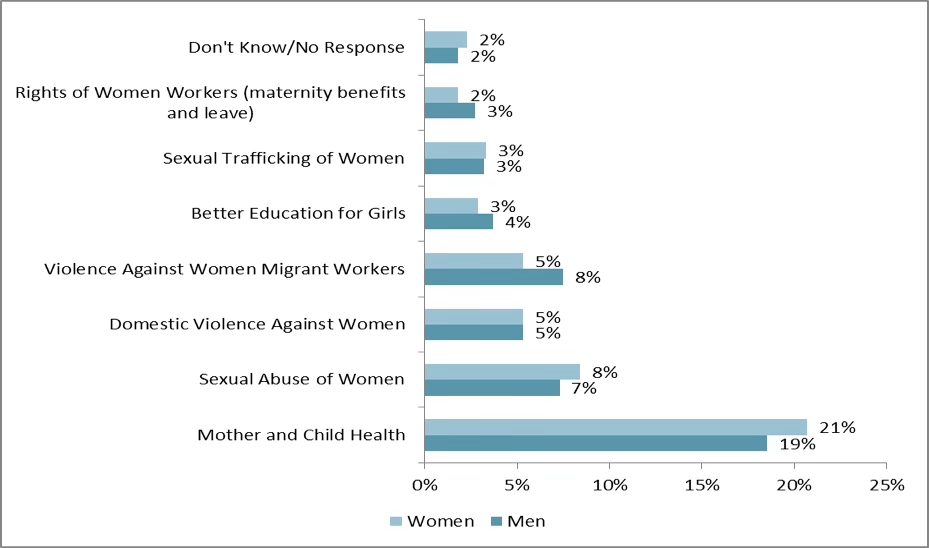
This is reflected in the WRI (Graphic 1) survey, which indicates that the problems of mother and child health (40%), sexual abuse experienced by women (15%), and workplace violence against women workers abroad (13%) are the three most significant issues requiring attention and prioritization for action from the public toward resolution. These findings show that women in Indonesia are still facing a number of constraints in improving their welfare and standing as citizens, and highlight the need for specific laws and regulations that protect and ensure the fulfillment of women’s rights.
Graphic 1. Priority Women’s Issues for Resolution
Formulation of Gender Equality and Equity Bill
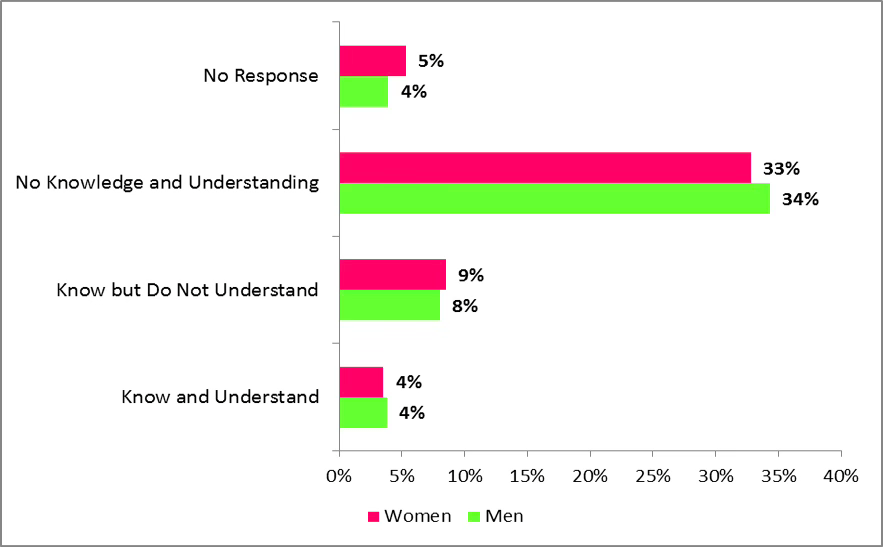
Up to the last legislative session at the end of 2013, with the discussion of the Gender Equality and Equity Bill by Commission VIII of the House of Representative yet to be completed, the public remained largely unaware of the significance of the pending legislation (see Graphic 2). Only 8% of the respondents reported knowledge and understanding of the bill, 17% responded that they knew about the bill but did not understand its contents, while 67% said that they neither knew about nor understood the contents of the Gender Equality and Equity Bill.
This indicates that there remains potential for the members of the House and non-legislative bodies (NGOs, government officials, and academics) to raise the public’s awareness of gender mainstreaming and gender responsive policies in their interactions with the public. This process is meant to result in the achievement of gender responsive policies that can meet the strategic needs of the public.
Graphic 2. Knowledge and Understanding of the Gender Equality and Equity Bill that could facilitate justice between men and women.
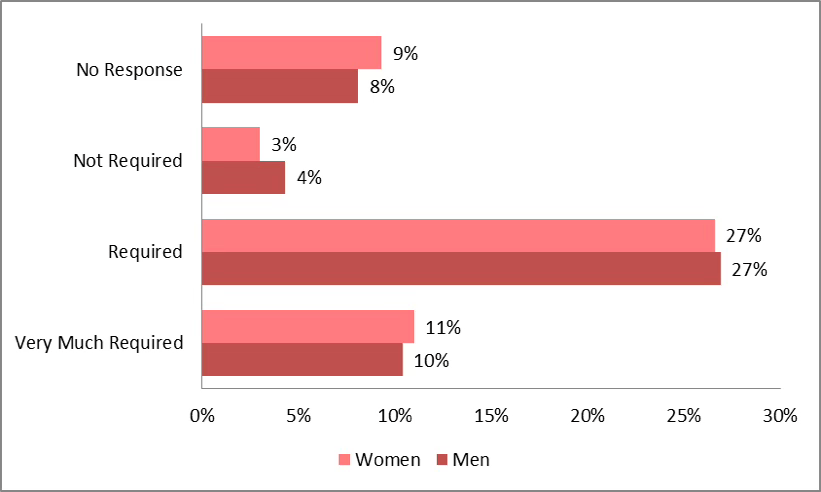
Other survey findings indicate that basic human rights are the rights of all Indonesians, without differentiation between men and women (Graphic 3). Within this context, it is clear that the public feels a need for policies that can ensure the resolution of the various problems faced, as well as policies that guarantee the fulfillment of rights and provision of opportunities for all people, both men and women. The Gender Equality and Equity Bill is also perceived as legislation that has the potential to respond to the issues of protection and the fulfillment and achievement of gender equality (Graphic 4). A large segment of respondents (75%; 54% responding “Agree” and 21% responding “Strongly Agree”) indicated that there was a need for gender responsive policies.
Graphic 3. Women and Men Must Be Provided Equal Opportunity to Basic Rights
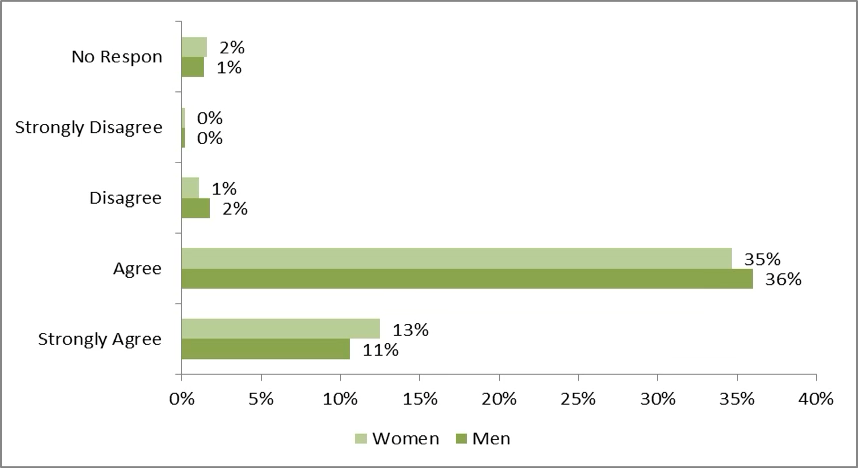
Graphic 4. Indonesia Requires Laws and Regulations that Facilitate the Establishment of Justice between Men and Women
Policy Recommendations
WRI, along with a network of women’s organizations, has advocated and raised awareness of the Gender Equality and Equity Bill among stakeholders. The recommendations WRI has made for the formulation of the Gender Equality and Equity Bill are as follows:
General Recommendations
- Request that the House of Representatives of the Republic of Indonesia discuss the Gender Equality and Equity Bill openly so that the public and civil society organizations and other extra-parliamentary organizations can provide support to and monitor the process for formulating the Gender Equality and Equity Bill.
- Request that the Indonesian House of Representatives actively communicate and hold routine discussions with the network of women’s organizations that regularly follow and monitor the series of activities undertaken by the House to accommodate the aspirations of the people in the formulation of content and substance for the Gender Equality and Equity Bill.
- Request that the Caucus of Women Parliamentary Members of the Republic of Indonesia actively function as a medium for the observation and monitoring of the formulation process for the Gender Equality and Equity Bill.
Specific Recommendations
- Request that members of the Indonesian House of Representatives carry out their legislative function in such as way that policies are created that reflect attention to the concepts of gender equality and equity. Also that the House budgeting function include a monitoring and evaluation mechanism that pays attention and monitors the planning and implementation of the state budget to ensure gender responsiveness as stipulated in the Gender Equality and Equity Bill.
- Request that the Indonesia House of Representatives guarantee the fulfillment and honoring of women’s rights within the understanding that the provision and implementation of these rights are the responsibility of the executive, legislative and judicial branches of government, as well as all NGOs and citizens as stipulated within the substance of the Gender Equality and Equity Bill.
 Women Research Institute